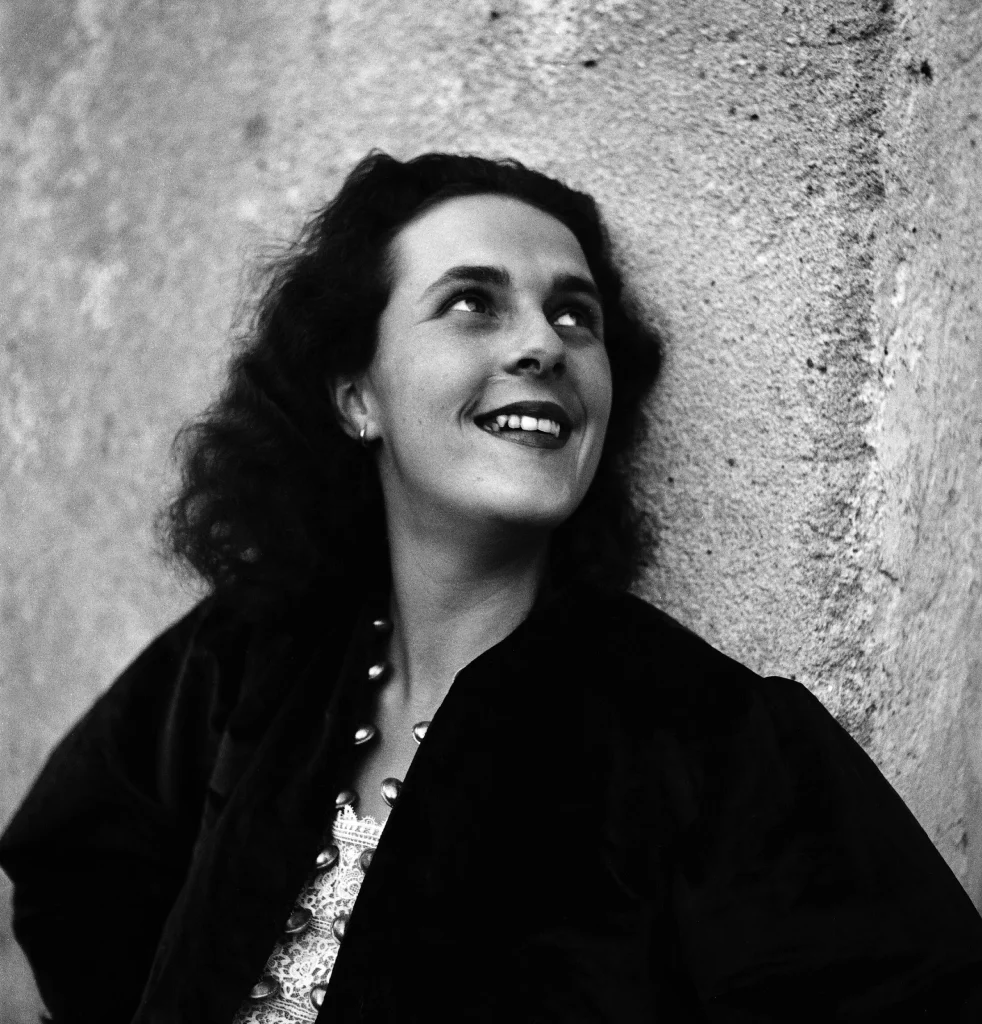
The Leonora Carrington biography unfolds like one of her surrealist paintings—layered, unpredictable, and filled with symbolism that challenges ordinary perception. Born into privilege yet drawn toward rebellion, Carrington refused to conform to societal expectations at every stage of her life. Instead, she forged a path defined by artistic freedom, intellectual curiosity, and emotional intensity. Her journey was not just about becoming an artist; rather, it was about redefining identity in a world that often sought to limit it.
From the very beginning, Leonora Carrington stood apart. While many artists gradually discovered their voice, she seemed to possess an innate sense of creative defiance. Consequently, her life story blends elements of fantasy and reality in ways that feel almost mythical. However, beneath the dreamlike surface lies a deeply human narrative marked by love, loss, exile, and resilience.
As you explore this Leonora Carrington biography, you’ll notice how seamlessly her personal experiences influenced her art. Each phase of her life—whether joyful or painful—fed into her creative output. For instance, her encounters with the Surrealist movement didn’t just shape her style; they transformed her worldview. Likewise, her struggles with mental health and displacement added emotional depth to her work.
So, why does Leonora Carrington continue to captivate audiences decades after her passing? The answer lies in her ability to transcend boundaries. She didn’t just create art; she built entire worlds filled with myth, magic, and meaning. This detailed Leonora Carrington biography takes you through her life chronologically, revealing how she became one of the most influential surrealist artists of the 20th century.
Quick Facts About Leonora Carrington
| Attribute | Details |
|---|---|
| Full Name | Leonora Carrington |
| Date of Birth | April 6, 1917 |
| Age | Died at 94 (2011) |
| Birthplace | Clayton Green, England |
| Nationality | British-Mexican |
| Profession | Painter, Writer, Sculptor |
| Art Movement | Surrealism |
| Years Active | 1930s – 2011 |
| Known For | Surrealist paintings, feminist themes |
Early Life and Background
Leonora Carrington was born into a wealthy British family in Lancashire, England. However, despite her privileged upbringing, she felt disconnected from the rigid expectations placed upon her. Her father, a successful industrialist, envisioned a conventional future for her, yet Leonora resisted those plans from an early age. Instead of embracing high society, she gravitated toward imagination, storytelling, and artistic exploration.
As a child, she often immersed herself in Celtic myths and folklore, which later became recurring themes in her work. These stories fueled her imagination and encouraged her to see the world through a mystical lens. Meanwhile, her rebellious nature became increasingly evident. She attended several schools but faced expulsion more than once due to her refusal to conform.
This tension between expectation and independence shaped her identity. On one hand, she had access to privilege and education. On the other, she constantly challenged authority and tradition. As a result, her early life laid the groundwork for her later artistic rebellion.
Age and Personal Details
Leonora Carrington lived a long and remarkably productive life, passing away at the age of 94 in 2011. Her longevity allowed her to witness and contribute to multiple artistic movements across decades. More importantly, it gave her the time to evolve continuously as an artist.
Throughout her life, Carrington maintained a strong sense of individuality. She refused to be defined by labels, whether societal or artistic. This independence extended to her personal style, beliefs, and creative choices. Even in her later years, she remained active and engaged, proving that creativity knows no age limits.
Education
Leonora’s educational journey was anything but traditional. Initially, her family attempted to guide her toward finishing schools that emphasized etiquette and social norms. However, she rejected this path and instead pursued formal art training.
Eventually, she studied at the Chelsea School of Art in London and later at the Ozenfant Academy of Fine Arts. These institutions provided her with technical skills, yet they also exposed her to avant-garde ideas. Consequently, she began to develop her own artistic voice.
During this time, she encountered works by surrealist artists, which deeply influenced her. Rather than simply adopting their style, she integrated their concepts into her unique perspective. This period marked the beginning of her transformation into a serious artist.
Career
Leonora Carrington’s career began in earnest when she became involved with the Surrealist movement in Paris. There, she met influential artists, including Max Ernst, who became both her mentor and romantic partner. This relationship significantly impacted her artistic development.
However, her career was not linear. World War II disrupted her life dramatically. After Ernst’s arrest by the Nazis, Carrington experienced a mental health crisis that led to her institutionalization in Spain. Despite this traumatic period, she later documented her experiences in her memoir Down Below, which remains a powerful piece of literature.
Eventually, she relocated to Mexico, where her career flourished. In this new environment, she found both creative freedom and cultural inspiration. She became part of a vibrant artistic community and produced some of her most iconic works. Her paintings, filled with dreamlike imagery and symbolic creatures, gained international recognition.
Achievements
Leonora Carrington achieved significant recognition during her lifetime and even more posthumously. She became one of the most prominent female figures in Surrealism, challenging a movement often dominated by men. Her work has been exhibited in major galleries worldwide, and her influence continues to grow.
Additionally, she excelled as a writer, producing novels, short stories, and plays. This versatility set her apart from many of her contemporaries. She didn’t limit herself to one medium; instead, she explored multiple forms of expression.
Net Worth
While exact figures regarding Leonora Carrington’s net worth remain unclear, her artworks have sold for millions at auctions. Today, her legacy holds immense cultural and financial value. Collectors and institutions highly seek her work, reflecting her enduring impact.
Personal Life and Family
Leonora eventually married Hungarian photographer Emerico “Chiki” Weisz, with whom she had two sons. Unlike her earlier turbulent relationships, this marriage provided stability and support. Her family life in Mexico allowed her to focus on her work while maintaining a sense of balance.
Publications
Carrington’s literary contributions include:
- The Hearing Trumpet
- Down Below
- Numerous short stories and plays
These works showcase her imaginative storytelling and philosophical depth.
Awards
Although she did not receive widespread recognition early in her career, later years brought significant honors. Museums and institutions celebrated her contributions to art and literature, solidifying her legacy.
Challenges and Controversies
Leonora Carrington faced numerous challenges, including mental health struggles and displacement during World War II. These experiences deeply affected her but also enriched her art. While controversies were minimal, her unconventional lifestyle often sparked public curiosity.
Legacy and Influence
The Leonora Carrington biography ultimately reveals a legacy defined by courage and creativity. She inspired generations of artists, particularly women, to embrace their individuality. Her work continues to influence contemporary art, literature, and feminist thought.
Conclusion
The Leonora Carrington biography is a testament to the power of imagination and resilience. Her life reminds us that true artistry often emerges from defiance and self-discovery.
FAQs
1. Who was Leonora Carrington?
She was a British-Mexican surrealist artist and writer known for her imaginative works.
2. What is Leonora Carrington famous for?
She is famous for surrealist paintings and feminist themes.
3. Did Leonora Carrington write books?
Yes, including The Hearing Trumpet and Down Below.
4. Where did Leonora Carrington live?
She spent much of her life in Mexico.
5. Who influenced her art?
Artists like Max Ernst influenced her early work.
6. What themes appear in her work?
Mythology, feminism, and surrealism are central themes.