The Jane Goodall biography tells the story of a woman whose curiosity transformed modern science. She changed the way humans understand animals and nature. Her work revealed deep connections between people and chimpanzees. Those discoveries reshaped primatology and environmental science.
Jane Goodall became one of the most influential scientists in the world. Her research began in the forests of Tanzania. At the time, she was only twenty-six years old. She had little formal scientific training. Yet she possessed determination and patience. Those qualities helped her achieve groundbreaking results.
Her work focused on chimpanzees. These animals are humans’ closest living relatives. Before her research, scientists knew very little about their behavior. Many believed chimpanzees were simple animals with limited intelligence. Goodall proved that assumption wrong.
Her discoveries showed that chimpanzees use tools and form complex social relationships. They also display emotions such as affection and aggression. These findings forced scientists to rethink the boundary between humans and animals.
The Jane Goodall biography is more than a scientific story. It is also a story about passion, courage, and hope. Through decades of work, she inspired millions to protect wildlife and the planet.
Why Her Story Still Inspires Scientists
Many scientists study animals. Few change the entire field. Jane Goodall belongs to that rare group. Her work challenged old scientific assumptions and introduced a new way of observing wildlife.
In 1960 she traveled to the Gombe Stream area of Tanzania. Her mission was simple. She wanted to observe wild chimpanzees in their natural environment. This project later became the longest running chimpanzee study in the world.
Her approach was unusual at the time. Most researchers kept emotional distance from animals. Goodall believed animals had personalities. She gave them names instead of numbers. This method helped her recognize individual behaviors and relationships.
Scientists first criticized her methods. Many believed emotional observation was unscientific. Yet her results proved powerful. Over time, the scientific community accepted her findings.
Today, researchers across the world use similar observational techniques. This influence shows the lasting importance of the Jane Goodall biography in scientific history.
Early Life and Childhood
Birth and Family Background
Jane Goodall was born on April 3, 1934, in London, England. Her full name was Valerie Jane Morris-Goodall. She grew up in Bournemouth on the southern coast of England.
Her father worked as an engineer. Her mother was a writer who published novels. The family environment encouraged creativity and curiosity. Young Jane spent many hours reading books about animals and nature.
Her parents supported her fascination with wildlife. They never discouraged her unusual dream of living among wild animals. That encouragement played an important role in shaping her future.
During childhood, she showed extraordinary patience when observing animals. She once spent several hours inside a henhouse. She wanted to discover how chickens lay eggs. Her mother praised her curiosity instead of scolding her.
These early experiences formed the foundation of the Jane Goodall biography. They reveal how childhood curiosity can shape a lifetime of scientific discovery.
Childhood Love for Animals
Jane’s love for animals began at a very young age. Books such as Tarzan and The Jungle Book fascinated her imagination. These stories inspired dreams of exploring Africa and living with wildlife.
At age ten, she already knew her life goal. She wanted to travel to Africa and study animals. Many people told her the dream was impossible. Girls rarely became scientists during that era.
She refused to give up. Instead, she worked hard and saved money for travel. Her determination demonstrated the persistence that later defined her research career.
Childhood experiences also taught her empathy toward animals. She believed animals deserved respect and understanding. This belief shaped her unique research style.
These formative years hold a special place in the Jane Goodall biography. They explain why she approached animals with patience, compassion, and curiosity.
Journey to Africa
Meeting Louis Leakey
Jane’s life changed dramatically when she traveled to Africa in 1957. She visited Kenya and met anthropologist Louis Leakey. He studied early human evolution and believed chimpanzees could provide important insights into human behavior.
Leakey recognized Jane’s potential immediately. He admired her passion and observational skills. Despite her lack of academic credentials, he trusted her ability.
He invited her to assist with research. Soon he proposed a bold idea. Jane would travel to Tanzania to study wild chimpanzees.
This opportunity launched the career described in the Jane Goodall biography. Without Leakey’s support, her journey might never have begun.
Beginning Research in Tanzania
In July 1960, Jane Goodall arrived at Gombe Stream in Tanzania. She was only twenty-six years old. At that time, chimpanzee behavior remained largely unknown.
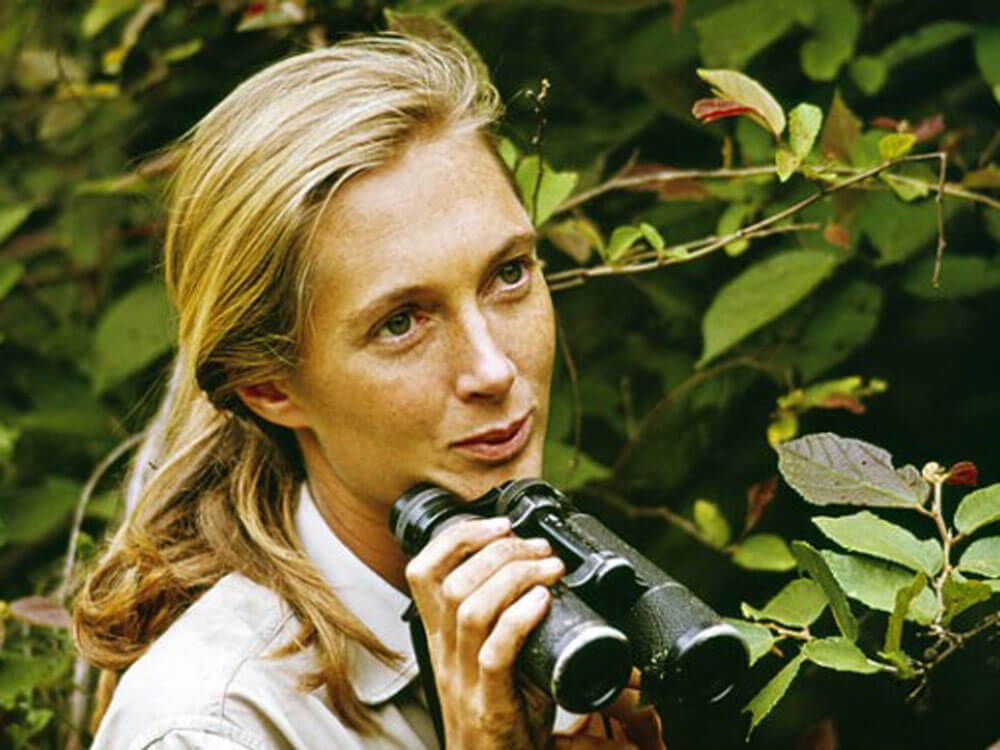
She began observing the animals with a notebook and binoculars. At first, the chimpanzees feared her presence. They ran away whenever she approached.
Patience became her greatest tool. She returned to the forest every day. Gradually, the chimpanzees accepted her presence.
Within a year, she could observe them from only a few meters away. This close observation allowed her to document behaviors never seen before.
These early experiences marked the beginning of the historic research described in the Jane Goodall biography.
Groundbreaking Chimpanzee Research
Observations at Gombe Stream
Life at Gombe required patience and discipline. Jane spent long hours walking through forests and hills. She carefully recorded chimpanzee activities and social interactions.
Her work revealed complex social structures among chimpanzee groups. Individuals formed friendships and family bonds. Some chimpanzees displayed leadership traits.
She also observed emotional behavior. Chimps hugged, played, and comforted each other. These actions showed striking similarities to human social behavior.
Her detailed observations created one of the richest wildlife research records in history. The Gombe research program continues today.
This stage remains one of the most significant chapters in the Jane Goodall biography.
Discovery of Tool-Using Chimpanzees
One discovery shocked the scientific world. Jane observed a chimpanzee using a stick to extract termites from a mound. The chimpanzee had modified the stick to make it work better.
Before this moment, scientists believed only humans used tools. Her discovery forced experts to reconsider that assumption.
Louis Leakey famously reacted to the discovery with excitement. He said scientists must now redefine humans or redefine tools.
The discovery gained global attention. It appeared in scientific journals and international media. Soon Jane Goodall became famous worldwide.
The Jane Goodall biography highlights this moment as one of the most important discoveries in animal behavior research.
Academic Achievements
Cambridge University PhD
Jane Goodall later pursued formal scientific education. She enrolled at Cambridge University in England. In 1965 she earned a doctorate in ethology, the study of animal behavior.
Her achievement was unusual. Cambridge allowed her to enter the program without an undergraduate degree. Few students received such an opportunity.
Her doctoral research focused on chimpanzee behavior. She analyzed years of observations collected at Gombe.
The academic community slowly began to accept her work. Scientists recognized the value of long-term field research.
This milestone strengthened the scientific credibility of the Jane Goodall biography.
Personal Life and Family
Marriage and Motherhood
Jane Goodall married wildlife photographer Hugo van Lawick in 1964. He worked with National Geographic and documented her research.
The couple had one son named Hugo Eric Louis. He was affectionately called “Grub.” The family spent several years in Tanzania near the research station.
Later, the marriage ended in divorce. Jane married Derek Bryceson, a Tanzanian government official who supported conservation efforts.
Her personal life remained closely connected to wildlife and environmental protection. Family experiences also influenced her perspective on conservation.
Founding the Jane Goodall Institute
Global Conservation Efforts
In 1977, Jane Goodall founded the Jane Goodall Institute. The organization supports wildlife research and conservation worldwide.
The institute works in many countries. Its projects protect chimpanzees and their habitats. It also promotes sustainable development for local communities.
Over time, the organization became a major global conservation network. Its programs support environmental education and scientific research.
This achievement represents a major chapter in the Jane Goodall biography.
Environmental Activism
Roots & Shoots Youth Movement
Jane Goodall believed young people could change the world. In 1991 she created the Roots & Shoots program.
This initiative encourages youth to protect animals, people, and the environment. Today the program operates in dozens of countries.
Students participate in community projects. These activities include tree planting, wildlife protection, and environmental education.
The movement has inspired millions of young people worldwide. It continues to grow every year.
Awards and Global Recognition
Jane Goodall received many international honors. Governments and organizations recognized her contributions to science and conservation.
She became a Dame Commander of the Order of the British Empire in 2003. She later received the Templeton Prize and the Presidential Medal of Freedom.
The United Nations also appointed her Messenger of Peace. This role allowed her to promote environmental awareness worldwide.
These achievements reflect the global influence of the Jane Goodall biography.
Legacy in Science and Conservation
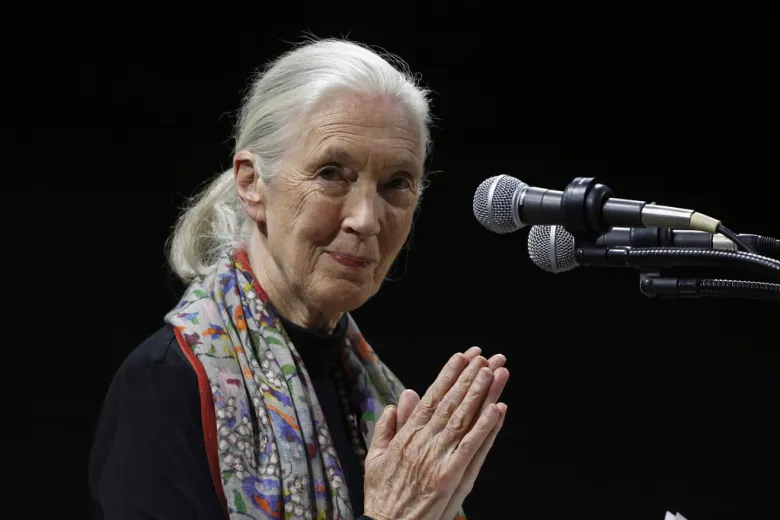
Jane Goodall passed away on October 1, 2025, at age ninety-one. Her work continues to influence scientists, activists, and educators worldwide.
Her research changed our understanding of animals. It also inspired a global conservation movement.
Today, thousands of researchers study animal behavior using methods she pioneered. Conservation groups around the world follow her philosophy of coexistence with nature.
The legacy of Jane Goodall will remain powerful for generations.
Conclusion
Jane Goodall’s life demonstrates the power of curiosity and perseverance. She began with a simple dream of studying animals in Africa. That dream transformed into one of the most influential scientific careers in history.
Her discoveries revealed deep similarities between humans and chimpanzees. These insights reshaped biology, psychology, and anthropology.
Beyond science, she inspired a global movement for environmental protection. Her programs continue to educate young people and protect wildlife habitats.
The Jane Goodall biography reminds us that one determined person can change the world. Through patience, compassion, and dedication, Jane Goodall transformed humanity’s relationship with nature.
FAQs
1. Who was Jane Goodall?
Jane Goodall was a British primatologist and conservationist famous for studying chimpanzees in Tanzania.
2. When was Jane Goodall born?
She was born on April 3, 1934, in London, England.
3. What is Jane Goodall famous for?
She discovered that chimpanzees use tools and have complex social behavior.
4. What is the Jane Goodall Institute?
It is a global organization founded in 1977 to support wildlife research and conservation.
5. Why is Jane Goodall important?
Her work transformed animal behavior science and inspired worldwide environmental conservation.