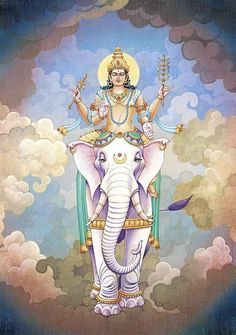
When you think about thunder roaring across the sky or rain pouring down after weeks of dryness, ancient civilizations didn’t just see weather—they saw power, personality, and divine authority. That’s where the story of Lord Indra biography begins. Known as the king of gods in Hindu mythology, Lord Indra stands as one of the most dynamic and complex figures in ancient religious texts. He isn’t just a god of storms; he is a warrior, a leader, and sometimes even a flawed ruler navigating cosmic responsibilities.
Interestingly, in early Vedic literature, especially the Rigveda, Lord Indra dominates the divine hierarchy, with nearly a quarter of hymns dedicated to him. This prominence shows how deeply ancient societies depended on rain and natural forces for survival. However, as time progressed, his influence evolved, making his story even more intriguing. So, why did his importance shift? And what makes him such a compelling figure today?
As we explore the Lord Indra biography, you’ll uncover a narrative filled with power struggles, victories, moral dilemmas, and timeless symbolism. Think of him as a blend of a warrior king and a weather controller like a mythological mix of Zeus and Thor, but uniquely rooted in Indian tradition.
Quick Facts About Lord Indra
| Attribute | Details |
|---|---|
| Full Name | Indra (also called Shakra, Devendra) |
| Role | King of Gods, God of Rain and Thunder |
| Religion | Hinduism (also appears in Buddhism & Jainism) |
| Parents | Kashyapa and Aditi |
| Wife | Shachi (Indrani) |
| Weapon | Vajra (Thunderbolt) |
| Vehicle | Airavata (White Elephant) |
| Residence | Svarga (Heaven) |
| Key Text | Rigveda |
| Famous Feat | Slaying of Vritra |
Early Life and Origins of Lord Indra
Birth and Parentage
Every great story starts somewhere, and the Lord Indra biography begins with divine origins. According to Hindu scriptures, Indra is the son of the sage Kashyapa and the goddess Aditi, making him part of the celestial lineage known as the Adityas. This lineage already places him among the most powerful beings in the cosmos, but his journey doesn’t stop at birth—it accelerates almost immediately.
Unlike human childhoods filled with gradual growth, Indra’s early life reflects rapid development and divine purpose. Ancient texts portray him as energetic, ambitious, and destined for leadership. From a symbolic standpoint, his birth represents the emergence of order from chaos, especially in the natural world where storms bring both destruction and renewal.
His name itself carries meaning. Derived from words associated with “rain” and “power,” Indra essentially embodies control over life-giving forces. Imagine living in a time when rainfall determined survival, Indra wasn’t just a god; he was hope.
Symbolism in Vedic Literature
Now, here’s where things get even more fascinating. In the Rigveda, Indra isn’t just a deity; he’s a symbol of strength, courage, and victory. He represents the warrior spirit of early Indo-Aryan society, often depicted battling chaos and restoring balance.
Think about it like this: if life were a constant battle between order and disorder, Indra would be the frontline general. His stories often revolve around defeating demons, releasing rivers, and ensuring prosperity. These aren’t just myths, they’re metaphors for natural cycles like rainfall and seasonal change.
Age of Lord Indra
Unlike historical figures, assigning a numerical age to Lord Indra doesn’t quite work. He exists beyond human time, often described as eternal or spanning cosmic cycles known as Manvantaras. Each cycle has its own Indra, meaning the title itself can be passed on.
This idea flips the concept of age on its head. Instead of asking “How old is Indra?” a better question might be, “How long has the role of Indra existed?” The answer: for as long as the cosmos has required balance between chaos and order.
Education and Divine Training
You might wonder does a god need education? Surprisingly, yes, at least in mythological storytelling. Indra’s “education” comes through experience, mentorship, and divine interactions. He learns warfare, strategy, and leadership from both allies and adversaries.
In many texts, Indra is guided by sages and supported by other deities like the Maruts, who help him control storms. His training is less about books and more about battles, decisions, and consequences.
This experiential learning shapes him into a powerful yet sometimes impulsive ruler. It’s almost like watching a leader grow through trial and error something we can all relate to.
Career and Rise to Power
Role in the Rigveda
If the Lord Indra biography had a golden era, it would undoubtedly be the Vedic period. During this time, Indra wasn’t just important he was the central figure. Nearly 25% of Rigvedic hymns praise him, highlighting his dominance.
He was seen as a protector of people, a bringer of rain, and a fearless warrior. Communities invoked his name before battles and during droughts, trusting him to deliver victory and sustenance.
King of Heaven (Svarga)
Indra’s career peaks when he becomes the ruler of Svarga, the heavenly realm. As king of the gods, he oversees cosmic order, manages divine resources, and ensures balance in the universe.
Picture a celestial kingdom where clouds are chariots and lightning is a weapon—Indra sits at the center, commanding it all. His leadership, however, isn’t always perfect, which adds depth to his character.
Major Achievements and Legendary Feats
Slaying of Vritra
Every hero has a defining moment, and for Indra, it’s the slaying of Vritra. This dragon-like demon hoarded water, causing drought across the world. Indra defeats Vritra using his thunderbolt, releasing rivers and restoring life.
This story isn’t just about victory, it symbolizes the triumph of life over stagnation. Rain returns, crops grow, and balance is restored.
Controller of Rain and Thunder
Indra’s control over weather makes him indispensable. He governs rain, storms, and lightning, ensuring agricultural prosperity.
Think about farmers waiting for rain it’s easy to see why Indra was so revered. He wasn’t just a god; he was survival itself.
Challenges and Controversies
Curse of Ahalya
Not all chapters in the Lord Indra biography are heroic. One of the most controversial stories involves Ahalya, leading to a curse that tarnishes his reputation.
This incident highlights his human-like flaws desire, ego, and consequences. It’s a reminder that even gods aren’t perfect.
Decline in Later Hinduism
Over time, Indra’s importance declines as deities like Vishnu and Shiva rise in prominence.
It’s almost like watching a once-dominant leader step back as new powers emerge. Yet, he never disappears, he evolves.
Personal Life: Wife and Family
Indra is married to Shachi, also known as Indrani, and together they have children, including Jayanta.
His family life reflects both stability and complexity, often intertwined with divine politics and cosmic responsibilities.
Net Worth and Symbolic Wealth
Talking about “net worth” for a god might sound unusual, but symbolically, Indra is immensely wealthy. He rules Svarga, possesses celestial treasures, and commands divine beings.
His wealth represents abundance—rain, prosperity, and life itself.
Publications and Scriptural Mentions
Indra appears extensively in:
- Rigveda
- Mahabharata
- Ramayana
- Puranas
These texts collectively shape the narrative of the Lord Indra biography.
Awards and Divine Honors
Indra’s greatest honor is his title: King of the Gods (Devendra). This alone signifies unmatched authority in the celestial hierarchy.
Legacy and Cultural Impact
Even today, Indra influences culture, literature, and spirituality. His stories symbolize natural forces, leadership, and the balance between power and responsibility.
Conclusion
The Lord Indra biography is more than mythology—it’s a reflection of human experience wrapped in divine storytelling. From heroic victories to personal flaws, Indra embodies the complexities of leadership and power. His journey reminds us that greatness isn’t about perfection—it’s about resilience, growth, and impact.
FAQs
1. Who is Lord Indra in Hindu mythology?
Lord Indra is the king of gods and the deity of rain, thunder, and storms.
2. What is Lord Indra famous for?
He is best known for defeating the demon Vritra and controlling rainfall.
3. Who is Indra’s wife?
His wife is Shachi, also called Indrani.
4. Why did Indra lose importance?
His prominence declined as gods like Vishnu and Shiva became central in later Hinduism.
5. What is Indra’s weapon?
His primary weapon is the Vajra, a powerful thunderbolt.